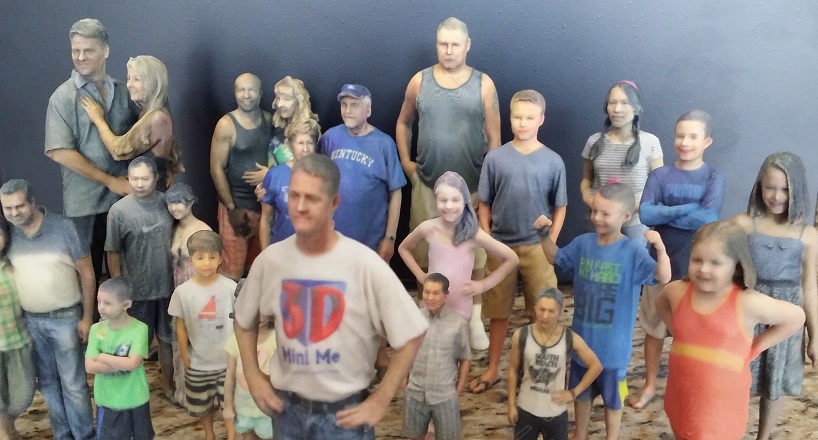
BOOK VERSION COMING SOON ON AMAZON
Chapter One
The Wooden Printer
It didn’t look like the future.
It looked like a shop project.
Wooden panels.
Bags of screws.
Wires everywhere.
My dad had always loved gadgets. If something new came out, he wanted it. Phones, tools, electronics that nobody else understood — if it beeped or plugged in, he had to try it.
So when 3D printing started becoming a thing, he bought one.
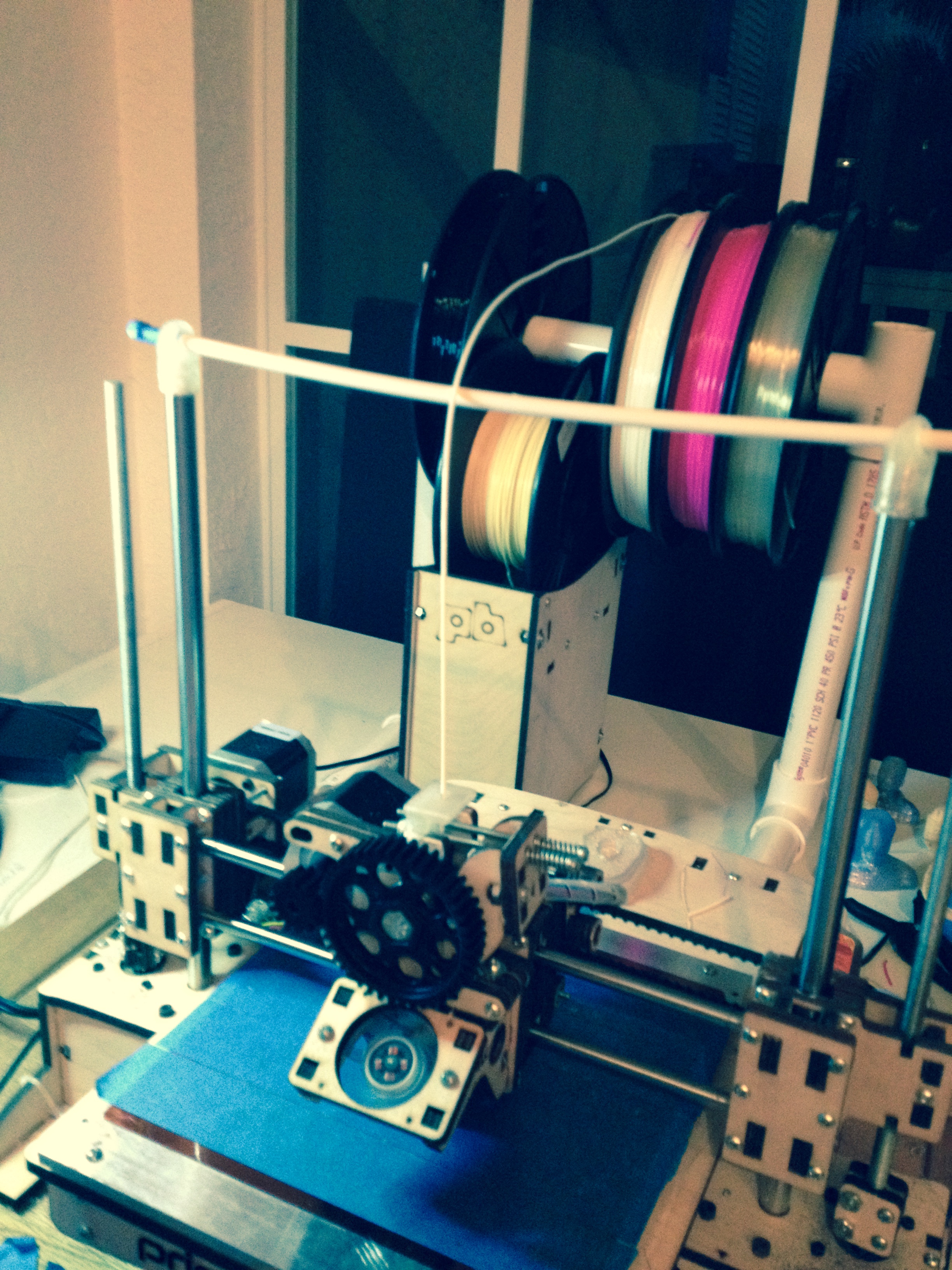
A wooden Printrbot.
You didn’t take it out of the box and plug it in. You had to build it first. It lived on our kitchen table because that was the only space big enough to lay everything out.
At the time, I had another job. I didn’t have extra time lying around. But I’d go over there whenever I could and help him.
We couldn’t even get it to turn on.
Hours of trying.
Nothing.
Finally we figured out the drivers wouldn’t install on his computer. It was running Windows 8. The printer needed Windows 7.
So I dragged my old computer over.
When it finally powered on, there was no big moment. No fireworks. Just a small machine humming to life in the kitchen.
We had no idea that little wooden printer would eventually lead to a store on Duval Street.
Back then, we were just trying to make it work.
Chapter Two
If You Came Over, You Got Scanned
The kitchen became our lab.
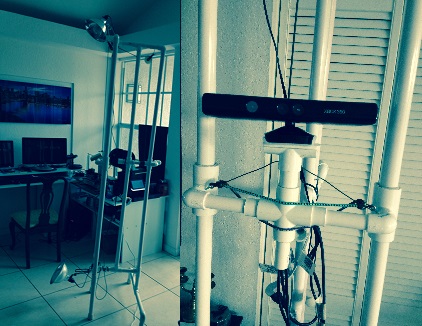
PVC pipes leaned against the wall.
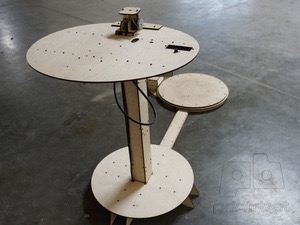
Turntables sat on the floor.
Cords ran across the counter.
Back then, there were no sleek scanning booths. No plug-and-play systems. If you wanted to scan something in 3D, you had to figure it out.
We used an Xbox Kinect.
An old gaming sensor.
We downloaded free software from the internet — the kind that might crash at any moment. It wasn’t designed to scan people. It was meant to scan rooms.
But we made it work.
Or at least we tried.
If you came to our house during that time, you were getting scanned.
Friends.
Relatives.
Neighbors.
We’d sit you on a chair. Sometimes we’d spin you on a motorized turntable. Sometimes one of us would slowly walk around you holding the Kinect.
Most scans failed.
You’d lose tracking halfway through.
Faces would melt.
Arms would disappear.
But every once in a while, we’d get one that was good enough.
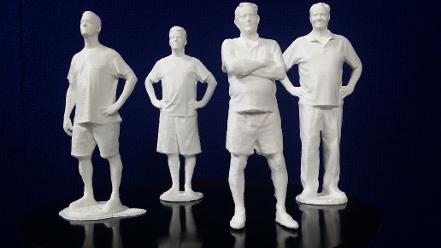
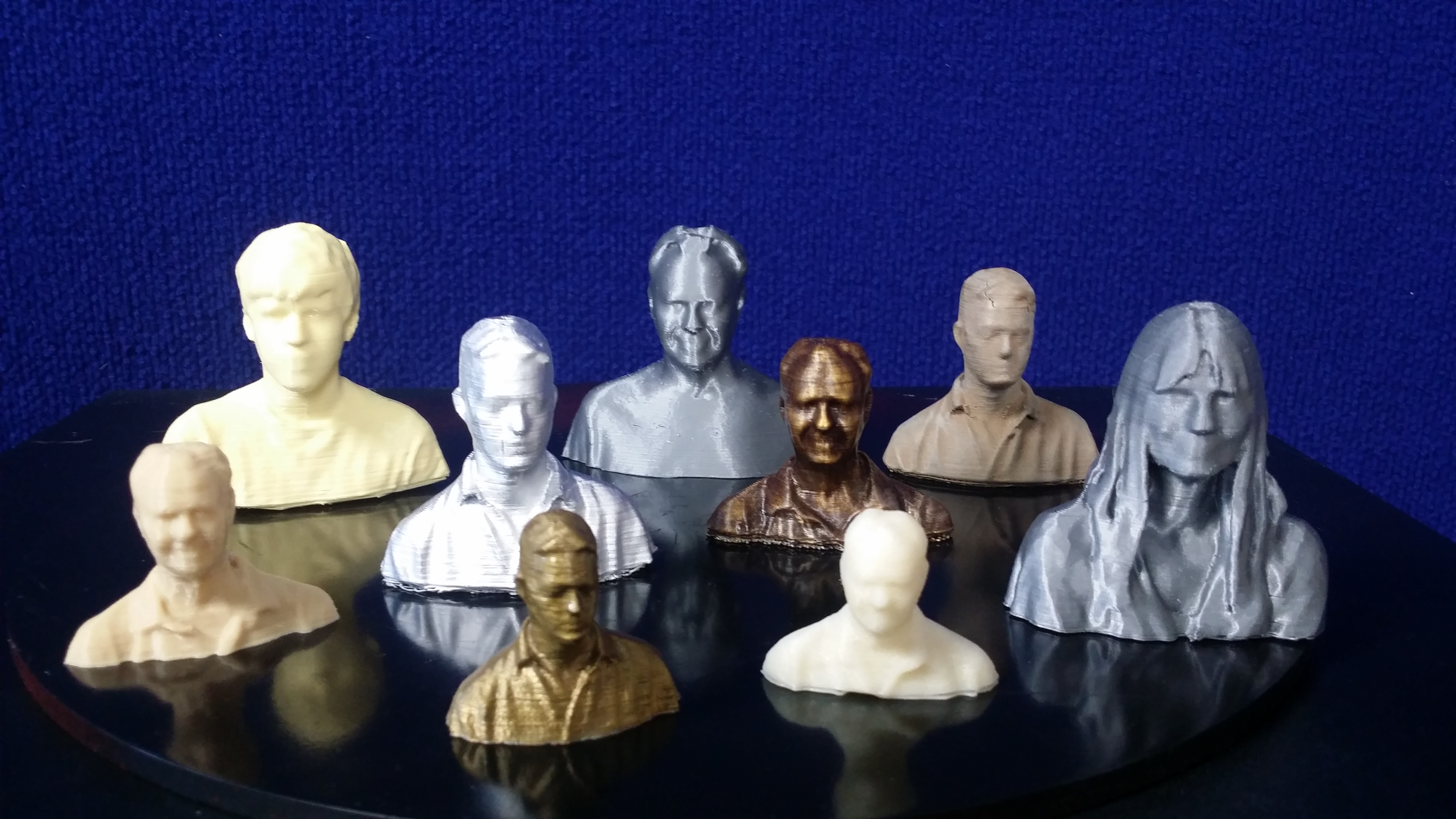
We printed them in plastic first.
They were rough.
But they looked like the person.
Then my dad would paint them with a bronze finish, like those old baby shoe keepsakes.
That’s when something clicked.
These weren’t just objects.
They were people.
Chapter Three
Two People Were Harder Than One
It took close to two years before we could reliably scan and print a single person.
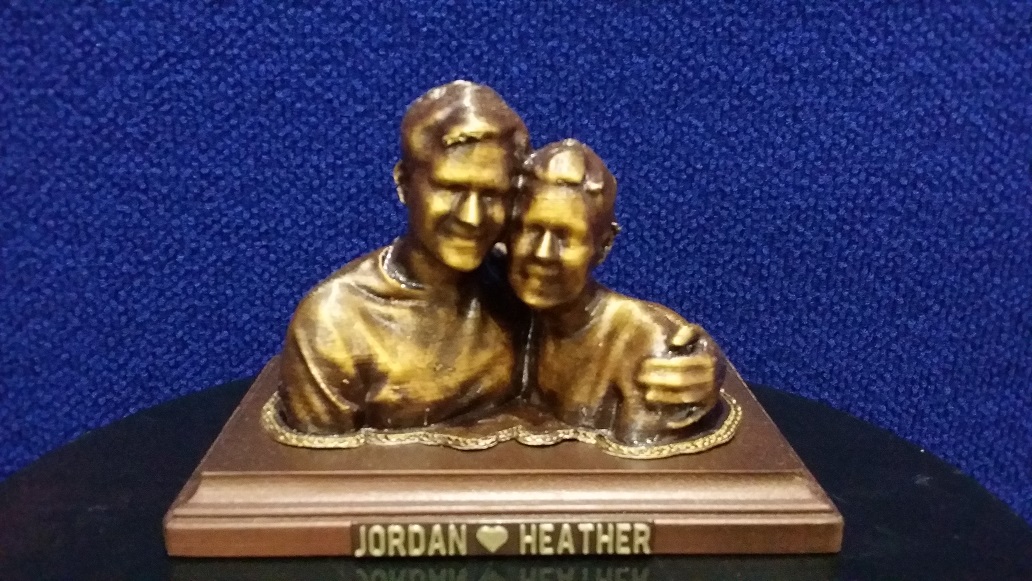
Then one night, my cousin Jordan came over with his girlfriend, Heather.
We told them to sit down.
Jordan wrapped his arm around her and said, “Okay, go.”
We stopped him.
“Wait. We’ve never scanned two people.”
One person was hard enough.
But we tried anyway.
When the file finished processing, we just stared at it.
There they were.
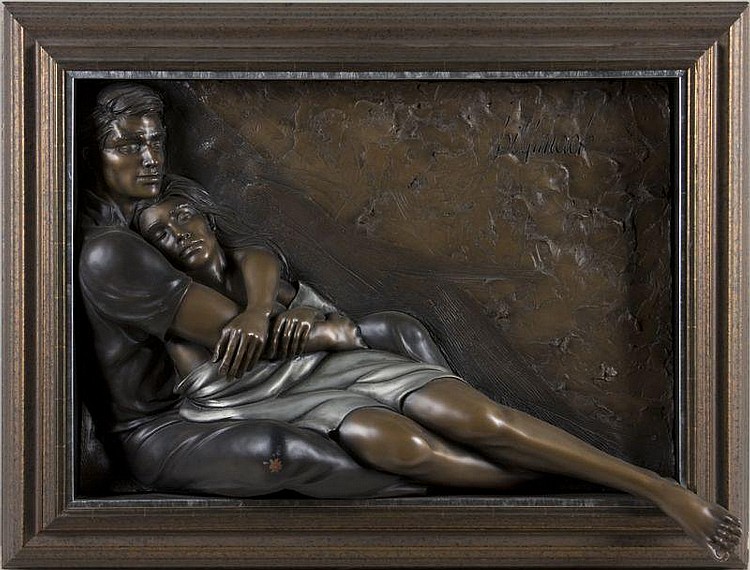
His arm around her.
Her leaning into him.
It worked.
Not perfectly.
But enough.
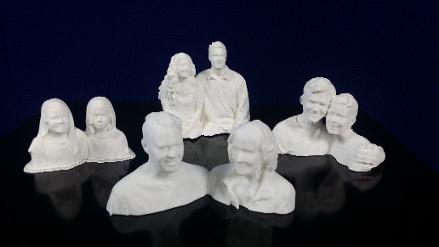
We cropped it into a bust and printed it. My dad bronzed it.
And for the first time, it didn’t feel like a novelty.
It felt like something someone would actually buy.
That was the first moment we thought:
Maybe this is more than a hobby.
Chapter Four
Opening Day
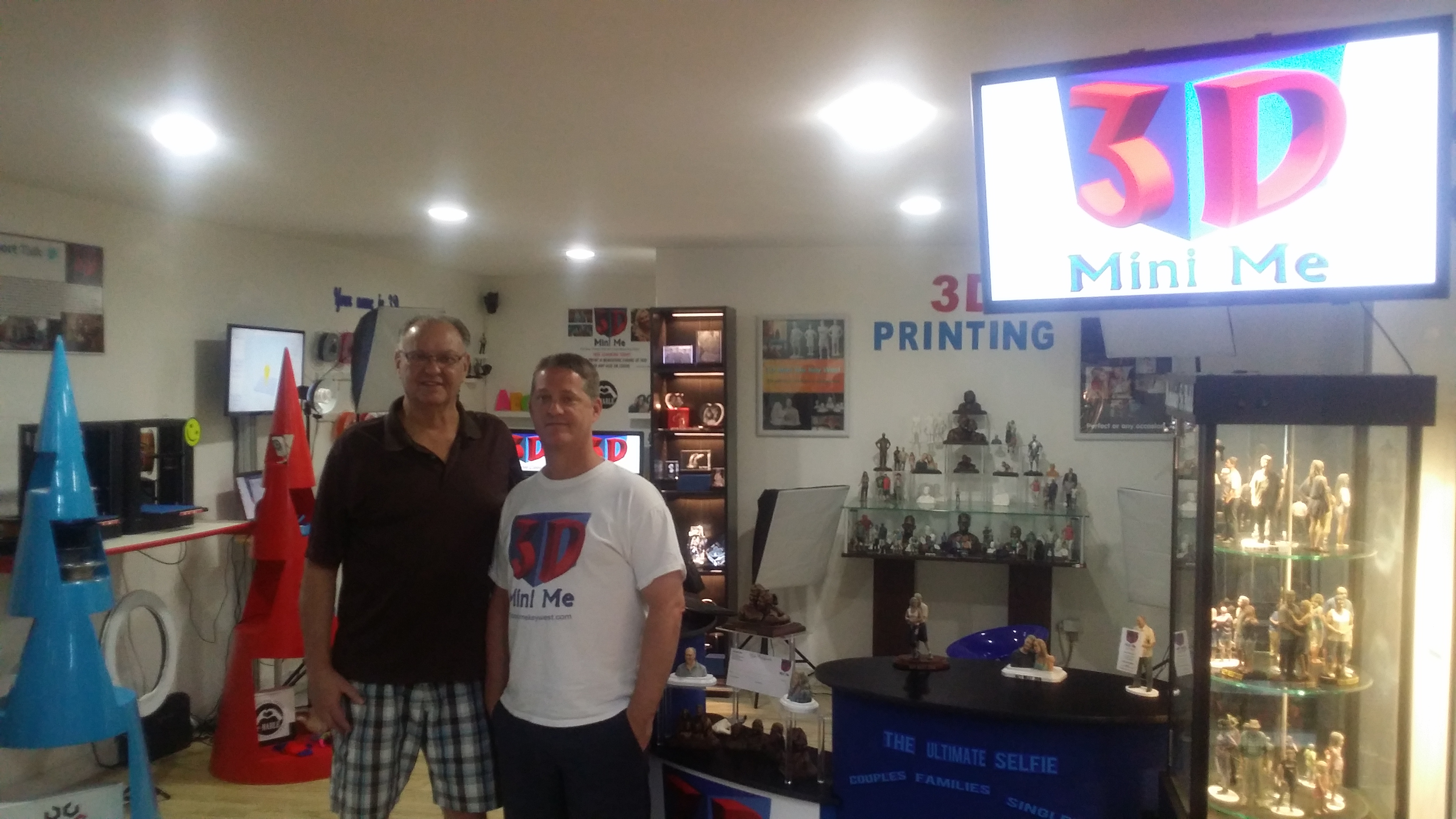
We worked on the Clinton Square Mall store for almost a month before we opened.
In and out every day.
Running wires.
Building displays.
Testing scans.
Answering questions from other shop owners.
“3D Mini-Me? What is that?”
“You print what?”
“Like a doll?”
They were curious, but nobody really understood it.
Honestly, we didn’t fully understand it either. We just knew it worked.
October 5th, 2015.
The store was ready.
We stood inside for a minute before unlocking the door.
I was nervous.
Not excited. Not confident. Nervous.
It’s one thing to experiment in your kitchen. It’s another thing to put a sign on a storefront and tell the world you’re open for business.
We looked at each other and said, “Okay.”
I unlocked the door.
Our first customer wasn’t a tourist.
It was a guy who worked downstairs in the mall.
He walked up and said, “Hey, you’re open? Can I do one?”
Just like that.
We scanned him.
We explained it would take hours to print. Three or four hours for a single bust. Then my dad had to paint it. Then it had to dry. It would be a few days before he could pick it up.
He didn’t care.
He paid us.
I think it was around sixty dollars.
That was our first sale.
No celebration.
No ribbon cutting.
Just a transaction.
But something changed that day.
We weren’t experimenting anymore.
We were a business.
The mall wasn’t glamorous.
Second floor.
Old carpet.
Dim lighting.
It smelled old.
I hated walking in there some mornings.
The only reason we survived was because of the bathrooms.
The Key West trolley would stop outside the mall, and tourists would go upstairs to use the restroom. On their way back down, they’d pass our door.
That was our traffic.
Biology brought them to us.
We didn’t do huge numbers in the beginning.
But we did enough.
Enough to cover rent.
Enough to stay open.
Enough to believe.
And what kept us going was the reaction.
People would walk in and just stare.
Most had never seen a 3D printer before. We always kept one running in the front of the store so people could watch it build something layer by layer.
Even if they didn’t buy one, they thought it was cool.
And in those early days, cool was enough.
Chapter Five
It Had to Be Duval
We stayed in Clinton Square Mall for about a year and a half.
And I’ll be honest — I never liked it.
It smelled old.
The lighting was dull.
Walking through that mall every morning felt heavy.
We were surviving, but we weren’t thriving.
From the very beginning, I had one rule in my head:
If we’re going to do this, we have to be on Duval Street.
Not near Duval.
Not off Duval.
Not upstairs somewhere.
On Duval.
That’s where Key West happens.
That’s where the tourists walk.
That’s where businesses either make it or disappear.
So every single day, on the way to work and on the way home, we drove up and down Duval Street looking for “For Rent” signs.
Over and over.
We’d call.
We’d set appointments.
We’d walk through spaces.
Too expensive.
Too risky.
Too much money.
Every time.
But we kept looking anyway.
Because I knew — if we were going to make this real, it had to be there.
Then one day, we saw it.
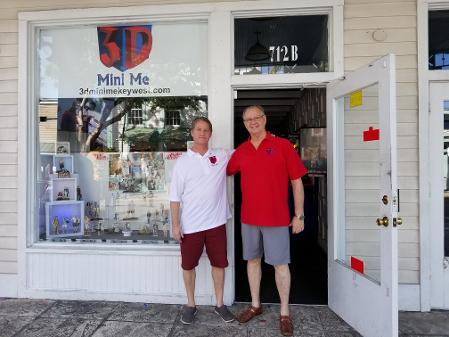
712B Duval Street.
We made an appointment to look at it.
And here’s something that still means a lot to me.
The owner of the building had been to our store in the mall.
He had walked into that second-floor space next to the bathrooms.
He had seen what we were doing.
And he loved it.
He thought it was the coolest thing he’d seen.
He told the leasing agent, Joyce, “Give them a try. I want to see what they can do in a real location.”
He gave us a chance.
Not because we had a huge company.
Not because we had deep pockets.
Not because we were proven on Duval Street.
He believed in the idea.
That doesn’t happen often in business.
Someone sees what you’re building before the world does — and decides you deserve a shot.
We signed the lease.
It was scary.
The rent was high.
The stakes were real.
There was no hiding anymore.
This wasn’t a bathroom-traffic experiment.
This was Duval Street.
And now we had to prove we belonged there.
Chapter Six
April 1st, 2017.
We unlocked the doors at 712B Duval Street.
This felt different from opening in the mall.
That first opening had been fear.
This was electricity.
We had spent months building that store out. Construction dust everywhere. Displays going up. Printers being tested. A big sign in the window teasing what was coming.
People would stop and look in while we worked.
Other shop owners would walk inside just to see what we were building.
By the time we opened, there was curiosity waiting for us.
We unlocked the door.
And the first day on Duval Street was better than the best day we had ever had in Clinton Square Mall.
Not close.
Better than our best day — on day one.
It was incredible.
People poured in.
They weren’t coming upstairs because they needed the bathroom anymore.
They were walking in because they wanted to see what this was.
We were immediately busy.
Almost overwhelmed.
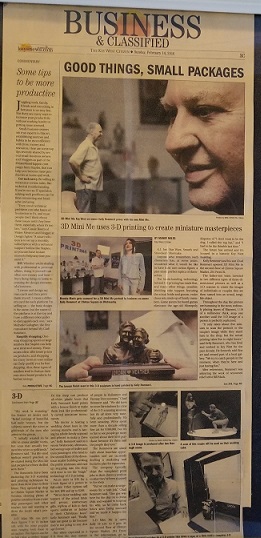
The newspaper did a full-page spread in the business section about us.
The radio station talked about us.
Articles popped up online — even overseas.
China.
I used to Google us constantly just to see what people were saying.
People were talking about 3D Mini-Me all over the world.
It was surreal.
We had gone from experimenting in a kitchen…
To being the talk of Duval Street.
But what people didn’t see was the work behind it.
This wasn’t “take a picture and print.”
Every scan had to be edited.
Cleaned.
Fixed.
Optimized.
That could take hours.
Then the file had to be prepared for print.
Then printed.
Then dried.
Then dipped and hardened.
Then cleaned again.
There were steps between every step.
People saw magic.
We saw workflow.
But that was the price of being first.
Around that time, we realized the scanning software we had been using wasn’t built for people at all. It was meant for scanning rooms and environments.
So we did something bigger.
We built our own.
We created the 3D Mini-Me scanning app.
Designed specifically for scanning people.
It’s still on the Apple App Store today.
We used an iPad with a structured-light scanner attached to it. I hand-scanned every single person.
Every file passed through my hands.
We weren’t just a store anymore.
We had built our own system.
And for a while, it felt like everything was finally clicking.
We had arrived.
Chapter Seven
Hurricane Irma
Everything was finally working.
We were on Duval Street.
The store was busy.
The press had written about us.
Orders were steady.
It felt like momentum.
Then September 2017 came.
Hurricane Irma.
It didn’t have to hit Key West directly to shake us.
The forecasts were terrifying. The entire Florida Keys evacuated. We packed up what we could and left, not knowing what we’d come back to.
You don’t think about business in that moment.
You think about survival.
You think about whether your building will still be standing.
We were gone for three weeks.
Three weeks of waiting.
Watching the news.
Hearing the worst.
When we finally came back, Key West was spared compared to what it could have been.
The buildings were still there.
Duval Street was still there.
Our store was still there.
We were lucky.
But it was a mess.
Debris everywhere.
People displaced.
Uncertainty in the air.
And then something else happened.
The news made it sound like Key West was destroyed.
Tourism stopped almost overnight.
Trips were canceled.
Cruise ships didn’t come.
Hotels sat empty.
For months, the island felt quiet.
But the bills didn’t stop.
Rent was still due.
Utilities were still due.
Insurance was still due.
We had just leveled up to one of the most expensive streets in Florida.
And suddenly, there was almost no one to sell to.
It was a huge setback.
The kind that keeps you awake at night doing math in your head.
We had finally climbed the mountain.
And then the ground shifted.
We survived.
But it wasn’t easy.
I sold my car.
My 2002 white Porsche Boxster.
It wasn’t worth a fortune. It was older. But it was my favorite car. A perfect Key West car. Windows down. Sun overhead.
I worked hard to buy that car.
And I handed over the keys to keep the store alive.
I probably borrowed money from my brother too. I don’t even remember every detail. I just remember the pressure.
We were barely making it.
But we had one thing working for us.
There was no competition.
You couldn’t order what we did online.
You couldn’t buy it somewhere else.
If you wanted a 3D Mini-Me, you had to come to us.
So we reached out to our customers.
We sent emails explaining what had happened. We offered discounts on reorders.
And people showed up.
They called.
They ordered again.
They told us how much their pieces meant to them.
Those reorders kept us alive.
It wasn’t glamorous.
But it was enough.
Irma didn’t destroy the store.
It tested whether we really believed in it.
And we did.
Next comes something unexpected.
Not another storm.
A different kind of growth.
Chapter Eight
“How Can I Do This?”
After Irma, it took a long time to feel normal again.
Sales didn’t snap back overnight.
It was slow.
Steady.
Sometimes frustrating.
Maybe a year before things felt close to what they had been.
Maybe never quite the same as that explosive first year on Duval.
But we kept pushing.
And something interesting started happening.
Every single day, someone would walk into the store and say the same thing.
“I’ve been everywhere.”
“I’ve traveled all over.”
“I’ve never seen anything like this.”
“How can I do this?”
At first, it felt like a compliment.
Then it started happening every day.
Not once a week.
Not occasionally.
Every day.
People didn’t just want a Mini-Me.
They wanted the business.
There was nobody else in the country doing it the way we were doing it.
Consistently.
In-house.
On display.
With the full workflow.
My dad started saying, “We need to franchise this.”
So we looked into franchising.
It’s complicated.
Lawyers.
Contracts.
Massive fees.
Heavy commitments.
It didn’t feel right.
It felt like it would bury us in paperwork.
So we decided to do something simpler.
We let people build their own version.
We sold our software.
We trained them.
We taught them the process.
They bought a portable scanner.
They scanned the customer.
They sent us the file.
We edited it.
We printed it.
We shipped it back to them — or directly to their customer.
They didn’t have to buy a $100,000 printer.
They didn’t have to master editing.
They just had to scan.
It became our affiliate program.
And it worked.
We sold quite a few.
For a while, that program became a huge part of our business.
It gave us another income stream.
It spread the idea.
It proved that what we built wasn’t just a store.
It was a system.
For the first time, we realized we weren’t just retailers.
We had created intellectual property.
Software.
Workflow.
Experience.
And that realization changed how we saw ourselves.
We weren’t just a cool shop on Duval Street anymore.
We were pioneers in something new.
Chapter Nine
The $100,000 Decision
By 2019, we knew something had to change.
We were still sending full-color files out to be printed by other companies. That worked in the beginning, but it wasn’t sustainable if we were going to keep growing — especially with affiliates sending us files.
If we were going to control quality.
If we were going to control turnaround time.
If we were going to build something real.
We had to own the printer.
Not a hobby printer.
An industrial one.
In December 2019, we bought our first full-color 3D printer.
A 3D Systems ProJet 660.
It cost around $100,000.
And it cost another $16,000 just to fill it with material before it could even print its first piece.
That’s not a small decision.
That’s not “let’s try this.”
That’s commitment.
It was scary.
The printer is massive.
It’s complicated.
It eats material.
It requires maintenance.
And the finishing process isn’t clean.
After printing, the pieces have to be hardened. The dipping solution we use is basically industrial super glue. It’s toxic. You need ventilation, downdraft tables, respirators.
So we built a clean room in the back of the store.
Sealed it off.
Installed proper ventilation.
Set up the workflow.
It wasn’t glamorous.
It was dusty.
It was messy.
It was technical.
But it was ours.
We had always kept plastic 3D printers running in the front of the store. I wanted people to see the process. Most people had never seen a 3D printer before. Watching something build layer by layer feels like magic.
But now, in the back, we had something different.
We had a manufacturing operation.
And once we bought the first one…
We bought a second.
Because you can’t run a business like that with only one machine.
If it goes down, you’re done.
So we doubled down.
Two industrial full-color printers.
Inside a store on Duval Street.
For the first time, it felt like we had fully stepped into it.
No outsourcing.
No middleman.
All in.
Everything was running beautifully.
Orders were moving faster.
We were finally catching up.
The workflow was smoother than it had ever been.
For the first time in years, it felt stable.
And then the world shut down.
Chapter Ten
The World Shuts Down
By early 2020, everything was finally running the way we had always imagined.
Two full-color industrial printers.
Orders moving faster.
Cleaner workflow.
Affiliates sending files.
Production dialed in.
For the first time, it felt smooth.
We had invested heavily.
We had built the clean room.
We had taken the risk.
And it was working.
Then COVID hit.
At first, it didn’t seem real.
Then it was everywhere.
Within days, Duval Street went quiet.
No tourists.
No cruise ships.
No foot traffic.
Just silence.
We closed the store like everyone else.
Three months.
Just like that.
You go from everything being perfect to wondering if the world is ending.
This wasn’t like Irma.
Irma was wind and water.
COVID was fear.
Nobody knew what was happening.
Nobody knew how long it would last.
Nobody knew if it was safe to leave their house.
You start asking bigger questions.
Are we going to survive this?
Is this the end?
Did we just buy two $100,000 printers right before the world stopped?
But we didn’t sit still.
We took three of our plastic printers home.
We started printing 3D masks for first responders.
We delivered them to hospitals.
To fire stations.
We weren’t making money.
We were contributing.
It gave us something to focus on when everything else felt frozen.
At the same time, we reached out to our customers.
We sent emails explaining what was happening.
We offered 50% off reorders.
And once again, people showed up.
We reprinted close to a hundred pieces.
Some people wanted another one because they loved theirs.
Some wanted gifts.
Some just wanted to help us survive.
It felt like they understood.
Like they were standing with us.
Slowly, the world reopened.
Slowly, Duval Street came back to life.
And once again, we were still there.
Hurricane.
Pandemic.
Six-figure risks.
Still there.
Chapter Eleven
The Ones Who Came Back
When we first opened, we thought this would be a one-time thing for most people.
You come to Key West.
You get a Mini-Me.
You go home.
That’s it.
We were wrong.
People came back.
Year after year.
There’s one family I’ll never forget.
The first time we scanned them, their daughter was probably four years old. She could barely sit still.
They came back the next year.
Then the next.
We watched her grow up.
The last time they came in, she walked through the door in her prom dress with her prom date.
We scanned them together.
We didn’t just print their vacation.
We printed time.
Fantasy Fest every year is its own chapter of chaos.
Wild costumes.
Body paint.
Nudity.
Groups of friends who plan all year for what they’re going to wear.
We’ve scanned pirates, superheroes, full themed nude groups, elaborate handmade costumes that probably took months to create.
Some of the craziest, most creative things you can imagine.
And they trust us with it.
Because they want to remember it.
We’ve had families fly in just to do this.
One family flew in from California.
Different states.
Different cities.
They all met in Key West for one day.
One day.
The only reason for the trip was to do their Mini-Mes together.
They scanned.
They celebrated.
They left.
We’ve had couples come from Ohio just to create wedding cake toppers.
That was the reason for the trip.
Not the beach.
Not the bars.
Not the sunset.
The Mini-Me.
We’ve had people build entire vacations around a 3D scan.
That still blows my mind.
We’ve also had the opposite moments.
Someone comes in excited.
Then years later, they call quietly and say one of the people in that Mini-Me is gone.
And they want another one.
Those are the calls that stay with you.
What surprised us the most wasn’t how many people did it once.
It was how many people made it part of their tradition.
“We’re back.”
“We had to do another one.”
“It wouldn’t be a trip without it.”
That’s when we realized something.
This wasn’t just a souvenir.
For some families, it became a timeline.
A way to measure growth.
To measure change.
To hold onto years.
And that’s something we never planned.
We were just trying to make the printer turn on.
Chapter Twelve
When They Call Us Crying, replacing the last portion cleanly:
We’ve printed close to 50,000 Mini-Mes.
Fifty thousand little pieces of someone’s life.
Some are wedding cake toppers.
Some are Fantasy Fest costumes that only made sense for one wild night.
Some mark a little girl at four years old.
Some mark her again at prom.
Some sit quietly on a shelf after someone in that piece is gone.
Some families fly across the country just to make one.
Some come back every year to add another chapter to their timeline.
We never planned any of that.
We were just trying to get a wooden printer to turn on.
One day my dad won’t be standing next to me in the store.
One day I won’t be standing there either.
And one day 712 Duval Street will belong to someone else.
But somewhere — on mantels, in living rooms, in boxes handed down to kids and grandkids — there will still be little versions of people we scanned.
Little reminders of moments that mattered.
And I think that’s the part that means the most.
We built something that holds time.
We built it together.
Side by side.